Performance
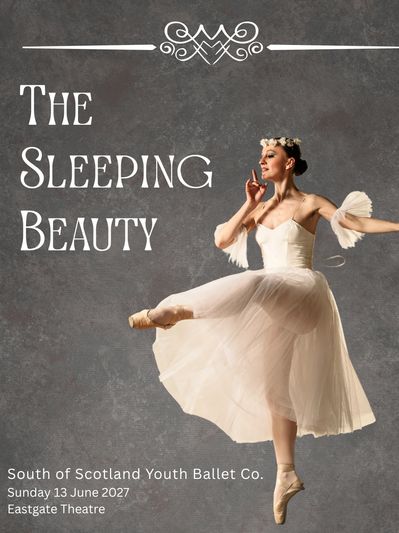
We're delighted to announce our 2027 show production will be the classic fairy-tale The Sleeping Beauty.
The Sleeping Beauty is one of ballet’s most iconic and loved works. Beyond the fairy-tale we all know, is a world of enchanting choreography, rich history and technical artistry that’s been captivating audiences for over a century.
The Sleeping Beauty was the first collaboration between choreographer Marius Petipa and composer Pyotr Ilyich Tchaikovsky, who had already achieved fame with Swan Lake. Commissioned by Ivan Vsevolozhsky, Director of the Imperial Theatres, the ballet was inspired by Charles Perrault’s literary fairytale La Belle au bois dormant (The Sleeping Beauty).
Vsevolozhsky imagined a lavish production set in the 17th century court of Louis XIV, one of the most visually opulent periods in French history. The original Beauty was rich with spectacle, classical technique and fairytale characters, with lavish sets and costumes reflecting the opulence of the Russian Imperial Theatre. Structured in three acts and a prologue, it ran for over four hours. Unlike many ballets of the time, the music was symphonically complex. Tchaikovsky worked closely with Petipa, who provided detailed instructions for musical timing and mood. This collaboration helped set a new standard for integrating music and dance in classical ballet.
Premiering in St. Petersburg on January 15, 1890, The Sleeping Beauty was an instant success and became a fixture of the repertoire. After the 1917 Revolution, the work gained wider recognition through the work of Russian emigrees. Sergei Diaghilev’s Ballets Russes presented a version in London in 1921, helping to introduce the ballet to Western audiences. Ninette de Valois’s 1946 production, starring the legendary Margot Fonteyn, cemented the ballet’s place in British ballet history. De Valois used Nikolai Sergeyev’s notation of Petipa’s choreography but made stylistic adaptations to reflect the English style – less grand, more musical phrasing and subtlety.
Since then, The Sleeping Beauty has gone on to become one of the world’s most widely performed ballets
Performance Sunday 13 June 2027

Our debut performance was Coppélia, considered one of the greatest comic ballets of the 19th Century, has remained one of the best-loved classical works in the Ballet repertory.
Dr. Coppélius is a doctor who has made a life-size dancing doll. It is so lifelike that Franz, a village youth, becomes infatuated with it and sets aside his heart's true desire, Swanhilda. She shows him his folly by dressing as the doll, pretending to make it come to life and ultimately saving him from an untimely end at the hands of the inventor.